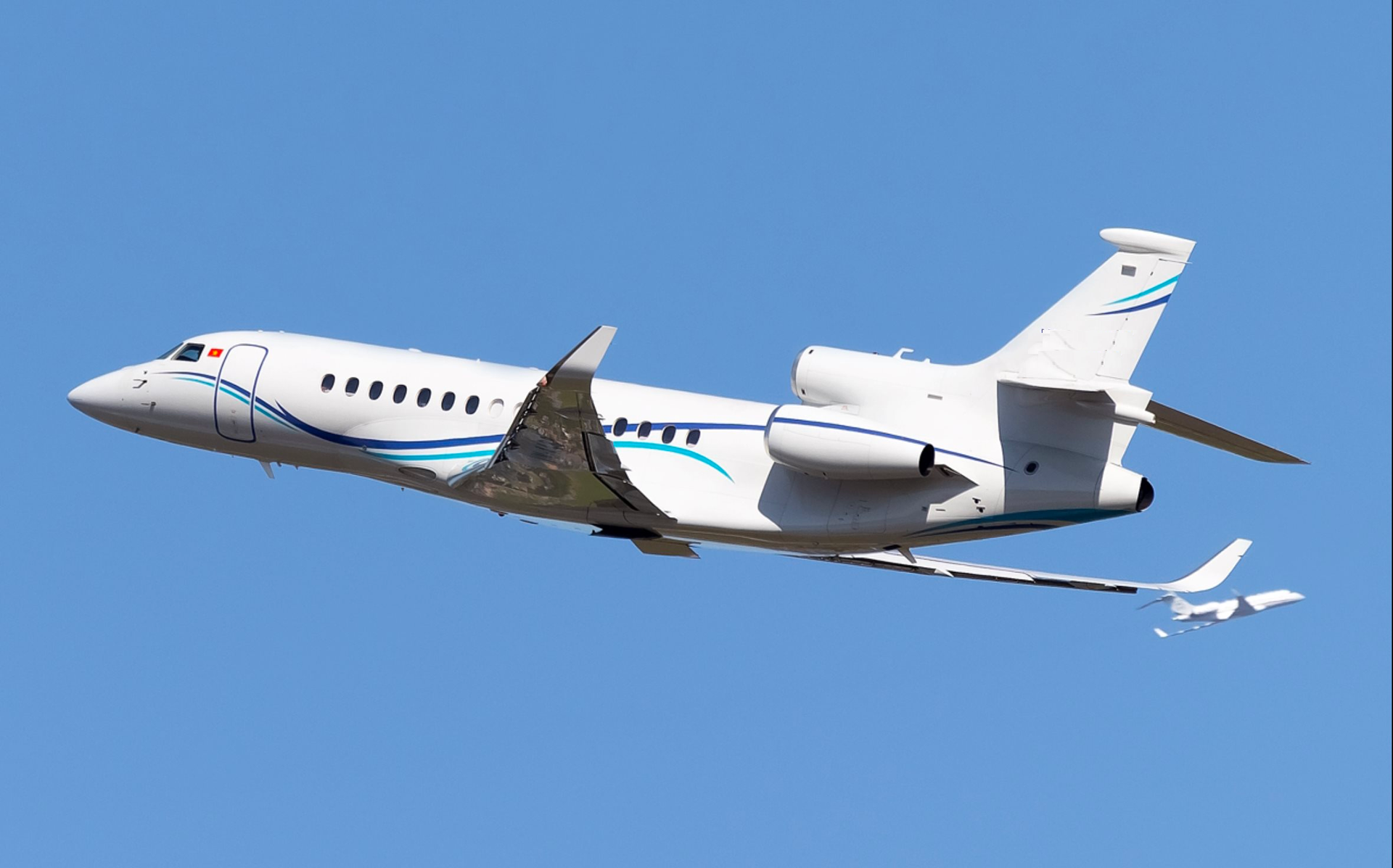
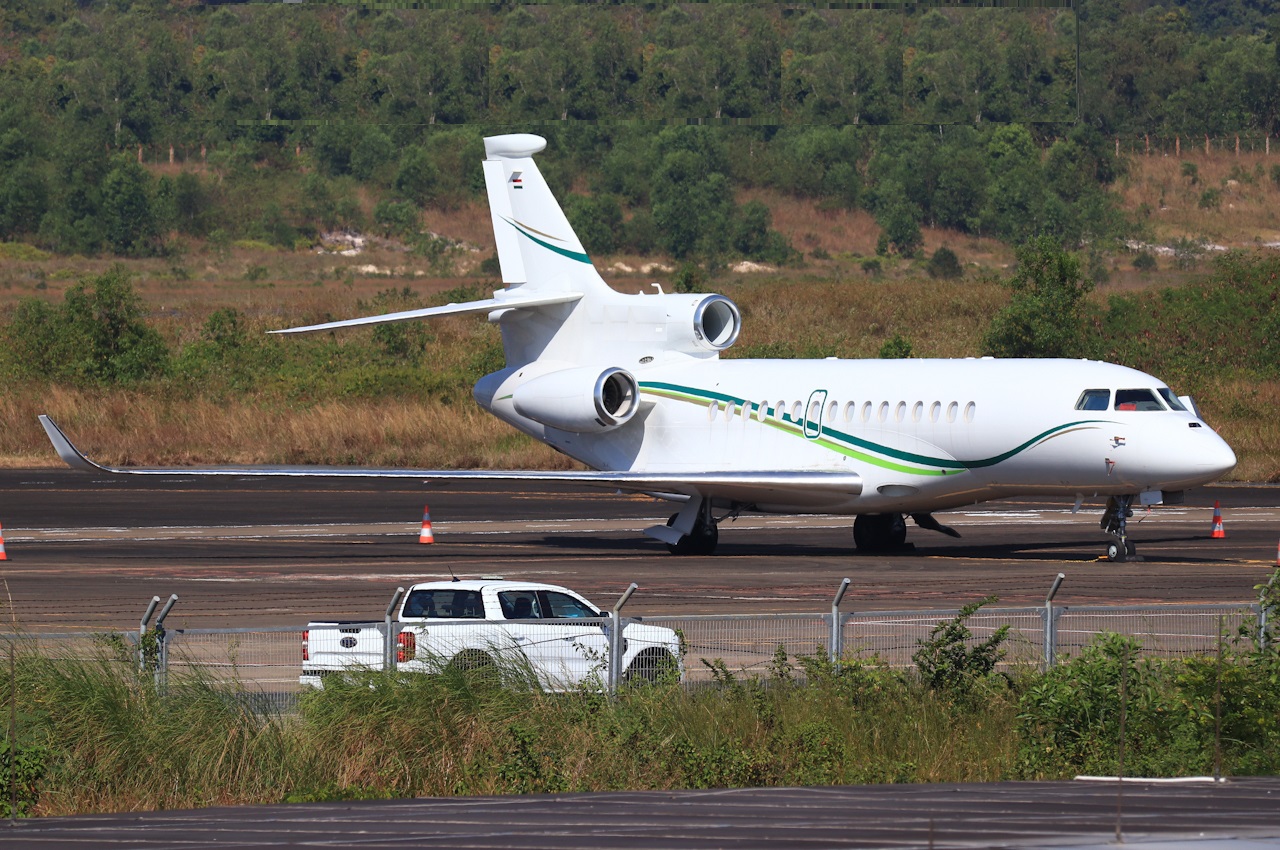
Performance extends beyond mere numerical metrics.
The large-cabin, long-range Falcon 8X may signify the conclusion of an era for Dassault Aviation. For over 40 years, the company’s flagship jets—from the Falcon 50 to the current 8X—have consistently featured three engines or tri-engine configuration. While this design may have appeared outdated, it provided owners with the ability to utilize shorter runways, particularly in warmer conditions, making these jets highly sought after by high-net-worth individuals seeking access to remote destinations. It is the overall performance of the Falcon 8X that distinguishes it from its competitors.
Falcon 8x - Vietnam Air Charter CompanyFollowing the Falcon 50, Dassault introduced additional trijet models, including the longer and wider 900 series. This series eventually evolved into the 7X and 8X, long-range models that directly compete with large-cabin offerings from Bombardier and Gulfstream.
However, Dassault's two newest large-cabin business jets, the under-development 6X and 10X, will feature only two engines. This transition was an inevitable response to the changing dynamics of aviation. In the early 1980s, the popularity of narrow and widebody commercial trijets began to decline. The advent of high-bypass-ratio turbofan engines made emerging twinjets more reliable and cost-effective in terms of fuel efficiency and maintenance. Furthermore, the introduction of the Extended-range, Twin-engine Operational Performance Standards (ETOPS) allowed for more direct transatlantic and transpacific flights with twin-engine aircraft.
While airline trijet stalwarts such as the Hawker-Siddeley Trident, Boeing 727, McDonnell-Douglas DC-10, Tupolev Tu-154, and Lockheed L-1011 prepared to exit the stage, Dassault took a contrarian approach, delivering the first Falcon 50 trijet in 1980. The Falcon 50 addressed the range limitations of the twin-engine Falcon 20, which, despite its robust airframe, was hampered by noisy and fuel-inefficient GE CF700 engines. The Falcon 20 required fuel stops for longer flights, while the Falcon 50, with its three more efficient Garrett (now Honeywell) engines, could cross the Atlantic and tackle headwinds effectively.
Featuring a 43-inch fuselage stretch and an additional 500 nautical miles of range compared to the 7X (with eight passengers and three crew members at Mach 0.8). This enhanced range, achieved through an additional center-fuselage fuel tank and a redesigned, lighter wing, which explains the impressive flight range of Dassault Falcon 8X . The restructured wing also allows the 8X to maintain competitive performance on shorter runways, requiring 6,000 feet for takeoff while being able to stop in just 2,150 feet.Cabin comfort meets performance
The wider and longer 900 series debuted in 1986 and remains in production today, followed by Dassault's first entry into the large-cabin, long-range market, the 7X, in 2007. The 7X features a 39-foot cabin, six feet longer than that of the 900 series, and incorporates a more efficient wing design with an 86-foot span. It was the first business jet to introduce full fly-by-wire computerized flight controls, allowing it to climb rapidly to 39,000 feet within 15 minutes of takeoff and cruise at a speed of Mach 0.90.
The performance of the Falcon 8X transcends the cockpit and engines; the cabin experience is equally remarkable. Dassault has meticulously designed the interior of the 8X to enhance comfort and productivity during extended flights. Spanning 42.67 feet (13 meters) in length, the cabin provides ample space for diverse seating configurations, which can include lounge areas, meeting spaces, and even private bedrooms. Dassault Falcon 8X Interior Design - Vietnam Air Charter Company Passengers aboard the 8X enjoy a low cabin altitude of 3,900 feet while cruising at 41,000 feet, significantly mitigating the effects of jet lag and ensuring travelers arrive at their destinations feeling rejuvenated. Furthermore, the aircraft boasts enhanced cabin humidity, reduced noise levels, and a cutting-edge in-flight entertainment system, all of which contribute to a more enjoyable long-haul flight experience, according to Dassault.The fuselage extension provides 7 percent more volume, facilitating a longer galley, increased legroom between seats, or an optional steam shower in the aft lavatory. Additionally, the 8X incorporates various enhancements that were not available when the 7X was introduced in 2007, including a lower cabin altitude of 3,900 feet while cruising at 41,000 feet, over 30 cabin layout options in three-zone configurations, four additional cabin windows, a 25 percent larger galley, fully electric seats, color-adjustable LED cabin lighting, an optional vacuum lavatory in the forward cabin, and a redesigned cockpit featuring avionics built around the Honeywell Primus Epic System and the Elbit head-up display, known as “FalconEye.” This innovative system allows pilots to land without needing to see out of the cockpit.
Dassault Falcon 8X's Interior Design - Vietnam Air Charter CompanyDespite its advanced fuel efficiency, the 8X offers comparable cabin space to its competitors, measuring approximately 43 feet in length, six feet in height, and nearly eight feet in width. According to the aircraft valuation service Vref, the 2016 Falcon 8X retains its value exceptionally well compared to market peers like the Bombardier Global 6000 and Gulfstream G550. As of the third quarter of this year, a 2016 8X maintained 74 percent of its original value, whereas the Global and Gulfstream retained only 51 percent and 56 percent, respectively.
These figures underscore the 8X’s enduring utility, efficiency, and sophistication. While it may be the last trijet in the business jet sector, it represents an exemplary execution of its class.
2016 Dassault Falcon 8X at a Glance:
-
Price (New): $57.5 million
-
Current Price: $42.73 million (typical)
-
Engines: 3 Pratt & Whitney Canada PW307D, 6,722 lb thrust each
-
Crew: 2–3
-
Passengers: 12–16 (typical)
-
Range: 6,450 nautical miles (3 crew, 8 passengers, Mach 0.80, NBAA IFR reserves)
-
Maximum Cruise Speed: Mach 0.90
-
Maximum Takeoff Weight (MTOW): 73,000 pounds
-
Takeoff Distance at MTOW: 6,000 feet
-
Cabin Dimensions: 42 ft, 10 in long; 6 ft, 2 in tall; 7 ft, 8 in wide.